
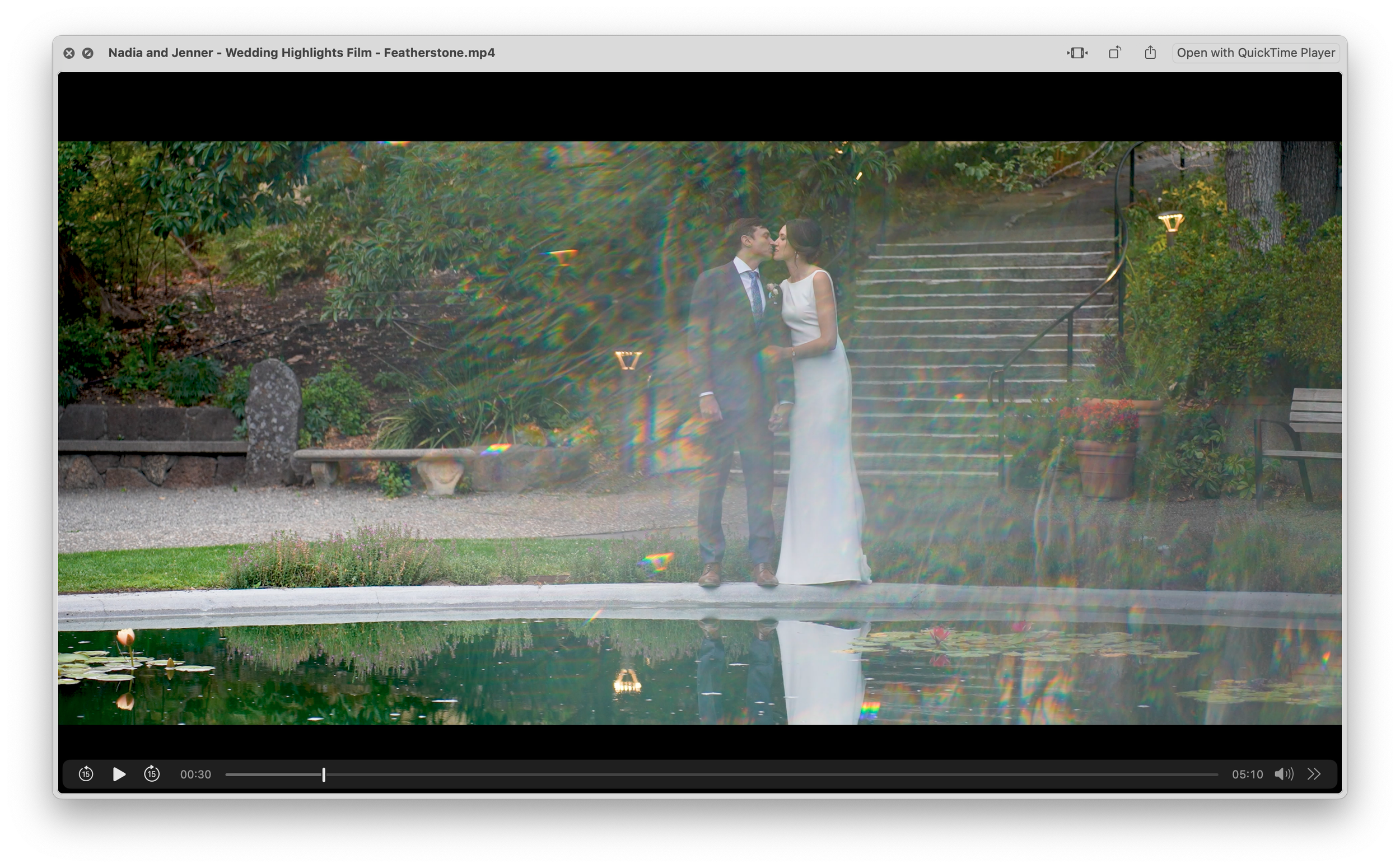
One of the most common concerns couples have is whether having a videographer will make the day feel staged or overly produced.
The assumption is understandable. Cameras can feel visible in everyday life. Weddings already have enough moving parts.
But in practice, film fits into the structure that’s already there.
A wedding day has its own rhythm:
People gathering.
Moments building.
Conversations overlapping.
A videographer doesn’t create that rhythm, they follow it.
Most of the day involves observation rather than direction. During the ceremony and speeches, the role is largely about positioning quietly and preserving audio clearly. During portraits, collaboration happens alongside the photographer, not in competition with them.
There may be small logistical adjustments, choosing a quieter corner for vows audio, stepping slightly to one side for a better angle, but these are brief and subtle.
The goal isn’t to control moments.
It’s to allow them to unfold naturally and be ready when they do.
Couples are often surprised afterward by how little they noticed filming, and how much was captured.
If you’re curious how that balance looks across different wedding days, you can explore examples here:
👉https://www.featherstonefilms.com/examples